



Springfield’s Summer Humidity Problem: Is Your HVAC System Helping or Hurting?
Summer in Springfield, Missouri brings plenty of sunshine, backyard barbecues, and time spent outdoors. It also brings something many homeowners dread just as much as the heat itself: humidity.
If you’ve ever walked into your home and felt sticky even though the air conditioner was running, you’re not alone. Excess humidity can make your home feel uncomfortable, force your HVAC system to work harder, and even create conditions that encourage mold growth and poor indoor air quality.
Many homeowners assume their air conditioner’s only job is to cool the air. In reality, your HVAC system plays a major role in controlling humidity levels as well. When everything is working properly, your air conditioner helps remove excess moisture from your home’s air. When something isn’t working correctly, humidity problems can quickly become noticeable.
Let’s take a closer look at how humidity affects your home and whether your HVAC system is helping or hurting your indoor comfort.
Why Humidity Feels Worse Than Heat
Humidity refers to the amount of moisture present in the air. During a typical Springfield summer, outdoor humidity levels can become extremely high, especially after rainstorms or during prolonged stretches of hot weather.
Your body naturally cools itself through perspiration. When humidity levels are high, sweat doesn’t evaporate as easily from your skin. As a result, you feel hotter than the actual temperature.
For example, an 85-degree day with high humidity can feel significantly warmer than an 85-degree day with lower humidity. The same principle applies inside your home. Even if your thermostat reads a comfortable temperature, excess moisture can leave your home feeling muggy and uncomfortable.
How Your Air Conditioner Removes Moisture
Most homeowners understand that an air conditioner cools the air, but fewer realize it also acts as a dehumidifier.
As warm air passes over your evaporator coil, moisture naturally condenses on the coil’s surface. This moisture then drains away through the condensate system while cooled air circulates throughout your home.
When your HVAC system is operating correctly, it continuously removes both heat and moisture from indoor air.
This process helps maintain comfortable humidity levels while reducing the sticky feeling often associated with Missouri summers.
However, several issues can interfere with this process.
Signs Your Home Has Excess Humidity
Sometimes humidity problems are obvious. Other times they develop gradually and become noticeable only after comfort issues start affecting daily life.
Here are several signs that excess humidity may be present inside your home.
Your Home Feels Sticky
One of the most common indicators is a lingering sticky feeling. Even when the thermostat is set to a comfortable temperature, the air feels damp or heavy.
Many homeowners respond by lowering the thermostat several degrees, hoping to improve comfort. Unfortunately, this often increases energy costs without solving the underlying humidity problem.
Condensation on Windows
If you notice moisture collecting on windows during the summer, excessive indoor humidity could be the culprit.
While occasional condensation may not be alarming, persistent moisture can contribute to mold growth and damage around window frames.
Musty Odors
High humidity creates an environment where mold and mildew can thrive.
A persistent musty smell in certain rooms, closets, or basements often points to excess moisture in the home.
Mold or Mildew Growth
Visible mold growth around vents, bathrooms, windows, or other damp areas can indicate that indoor humidity levels are too high.
Addressing humidity issues quickly can help prevent more extensive problems from developing.
Can an Oversized Air Conditioner Cause Humidity Problems?
Many homeowners are surprised to learn that bigger isn’t always better when it comes to air conditioning systems.
An oversized AC unit may cool your home very quickly, but that speed can actually create humidity issues.
Here’s why.
Removing moisture requires time. If your air conditioner cools the home too rapidly, it may shut off before completing enough dehumidification.
This creates a condition known as short cycling.
Short cycling occurs when the system turns on and off frequently. While the home reaches the desired temperature, humidity remains elevated because the system never runs long enough to remove sufficient moisture.
As a result, homeowners may experience cool but uncomfortable indoor conditions.
Proper system sizing is essential for both temperature control and humidity management.
Other HVAC Issues That May Contribute to High Humidity
Humidity problems aren’t always caused by system size alone.
Several HVAC-related issues can reduce your system’s ability to manage moisture effectively.
Dirty Air Filters
Restricted airflow caused by a clogged filter can reduce overall system performance.
When airflow becomes limited, cooling and dehumidification efficiency may decline.
Replacing filters regularly is one of the easiest ways to support proper HVAC operation.
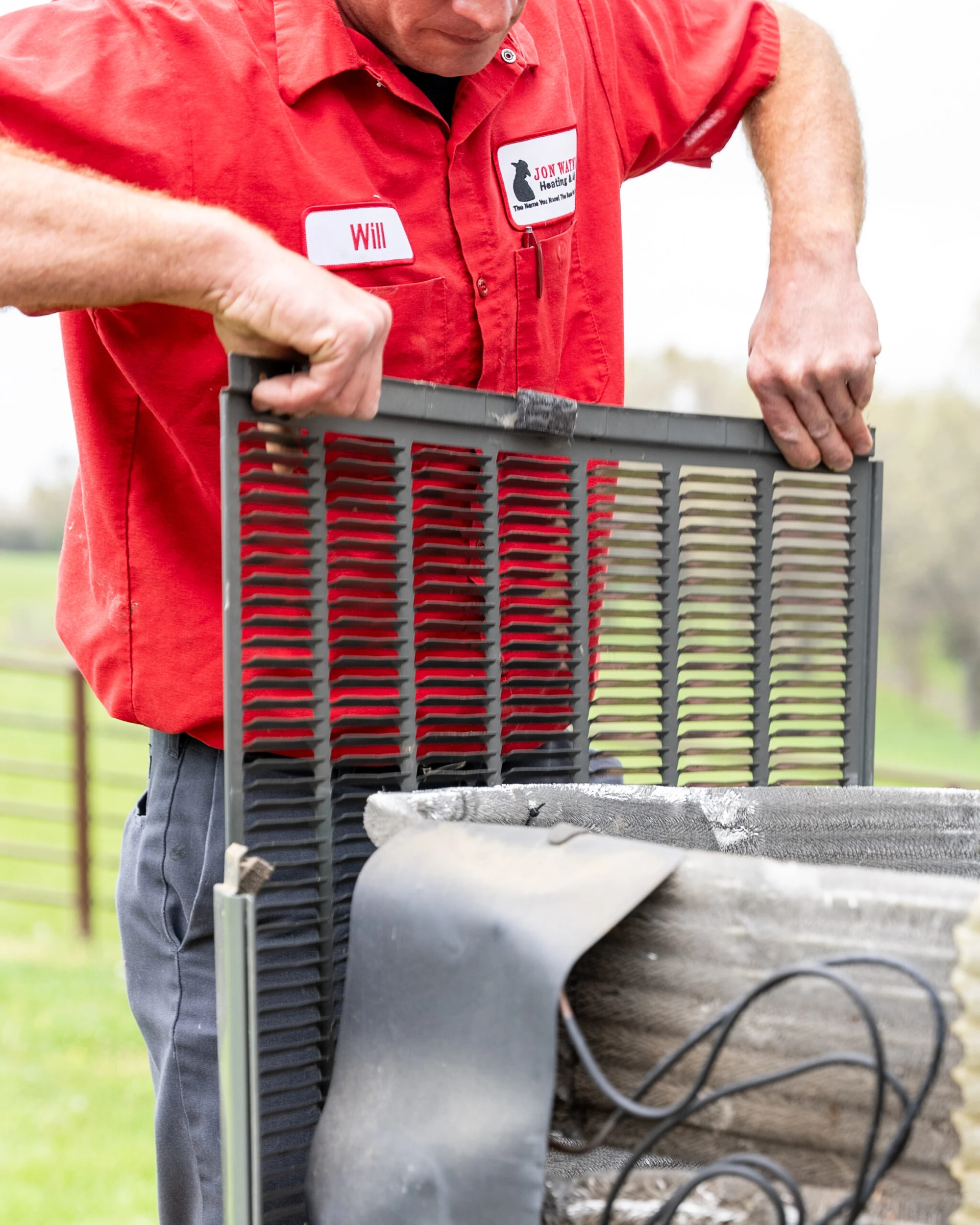
Dirty Evaporator Coils
Over time, dust and debris can accumulate on indoor coils.
Dirty coils reduce heat transfer efficiency and may interfere with the system’s ability to remove moisture from the air.
Leaky Ductwork
Damaged or poorly sealed ductwork can allow humid attic or crawlspace air to enter your home’s air distribution system.
This added moisture can make it more difficult to maintain comfortable humidity levels.
Aging Equipment
Older HVAC systems naturally lose efficiency over time.
If your system struggles to maintain comfort during the hottest months of the year, it may be worth having a professional inspection performed.
What Is the Ideal Indoor Humidity Level?
For most homes, indoor humidity should remain between 30% and 50%.
During the summer months, staying within this range helps improve comfort while reducing the likelihood of mold growth and moisture-related damage.
When humidity climbs above 60%, homeowners often begin noticing common symptoms such as:
- Sticky indoor air
- Increased discomfort
- Musty odors
- Condensation on surfaces
- Higher cooling costs
Maintaining balanced humidity contributes to a healthier and more comfortable living environment.
Additional Solutions for Humidity Control
In some cases, your air conditioner may benefit from additional support.
Several options can help improve indoor humidity management.
Whole-Home Dehumidifiers
A whole-home dehumidifier works alongside your HVAC system to remove excess moisture throughout the house.
These systems are particularly beneficial during periods of extreme humidity when air conditioners alone may struggle to keep up.
Smart Thermostats
Modern thermostats often include humidity monitoring features that help homeowners better understand indoor conditions.
Some models can even make automatic adjustments to support comfort and efficiency.
Routine HVAC Maintenance
Regular maintenance helps ensure every component of your system is operating properly.
Professional inspections can identify issues affecting humidity control before they become major problems.
Why Proper Humidity Matters
Humidity affects more than just comfort.
Maintaining appropriate moisture levels can provide several important benefits:
- Improved indoor comfort
- Reduced strain on HVAC equipment
- Better energy efficiency
- Lower risk of mold and mildew growth
- Protection for wood flooring and furniture
- Healthier indoor air quality
When humidity remains under control, homeowners often find they can stay comfortable without constantly adjusting the thermostat.
Trust Jon Wayne Heating and Air for Summer Comfort in Springfield
Springfield summers are known for heat and humidity. While you can’t control the weather outside, you can improve comfort inside your home.
If your house feels damp, sticky, or uncomfortable despite your air conditioner running regularly, your HVAC system may not be managing humidity as effectively as it should.
The experienced team at Jon Wayne Heating and Air can inspect your system, identify potential issues, and recommend solutions designed to improve both comfort and efficiency.
Don’t spend another Missouri summer battling indoor humidity. Contact Jon Wayne Heating and Air today to schedule an HVAC evaluation and keep your home comfortable all season long.

