



Why Is My Air Conditioner Freezing Up in the Middle of Summer?
When temperatures climb into the 90s in Springfield, Missouri, the last thing most homeowners expect to see is ice on their air conditioner. After all, how could a system designed to cool your home actually freeze during some of the hottest days of the year?
Surprisingly, a frozen air conditioner is one of the more common HVAC problems homeowners encounter during the summer months. While the sight of ice on your system may seem unusual, it is often a sign that something is preventing your air conditioner from operating properly.
If you’ve noticed ice on your indoor unit, refrigerant lines, or evaporator coil, it’s important to understand what causes this problem and what steps you should take next. Ignoring a frozen air conditioner can lead to reduced comfort, higher energy bills, and potentially expensive repairs.
Let’s explore why air conditioners freeze up in the middle of summer and what Springfield homeowners can do about it.
Can an Air Conditioner Really Freeze During Hot Weather?
It sounds backwards, but yes, an air conditioner can absolutely freeze when outdoor temperatures are extremely high.
Your AC system works by absorbing heat from inside your home and transferring it outdoors. The evaporator coil inside your home becomes very cold during this process.
Under normal conditions, warm indoor air continuously moves across the coil. This airflow prevents the coil from becoming too cold and allows moisture to drain away properly.
When something disrupts airflow or affects the cooling cycle, the evaporator coil’s temperature can drop below freezing. Moisture that would normally drain away begins turning into ice instead.
Once ice starts forming, the problem often gets worse. The growing layer of ice further restricts airflow, causing even more freezing to occur.
Signs Your Air Conditioner Is Frozen
In some cases, homeowners can clearly see ice forming on parts of the system. In other situations, the signs may be less obvious.
Watch for these common indicators of a frozen AC unit:
Reduced Airflow
One of the earliest warning signs is weak airflow coming from your vents.
Even though the system is running, less conditioned air reaches the living areas of your home.
Warm Air From Vents
Many homeowners assume a frozen system would produce extra cold air. In reality, the opposite often happens.
As ice builds on the evaporator coil, the system becomes less effective at removing heat. Eventually, you may notice warm or room-temperature air coming from your vents.
Ice on Refrigerant Lines
Visible ice on copper refrigerant lines is often one of the clearest indicators that something is wrong.
If you see frost or ice accumulation near the indoor unit, it’s time to investigate further.
Water Around the Indoor Unit
After a frozen coil begins thawing, excess water may accumulate around the indoor portion of your HVAC system.
Puddles or unexplained moisture near the unit should never be ignored.
Longer Cooling Cycles
A frozen air conditioner struggles to cool your home efficiently.
As a result, the system may run for extended periods while indoor temperatures continue to rise.
The Most Common Causes of a Frozen Air Conditioner
Several issues can lead to a frozen evaporator coil. Some are simple to address, while others require professional service.
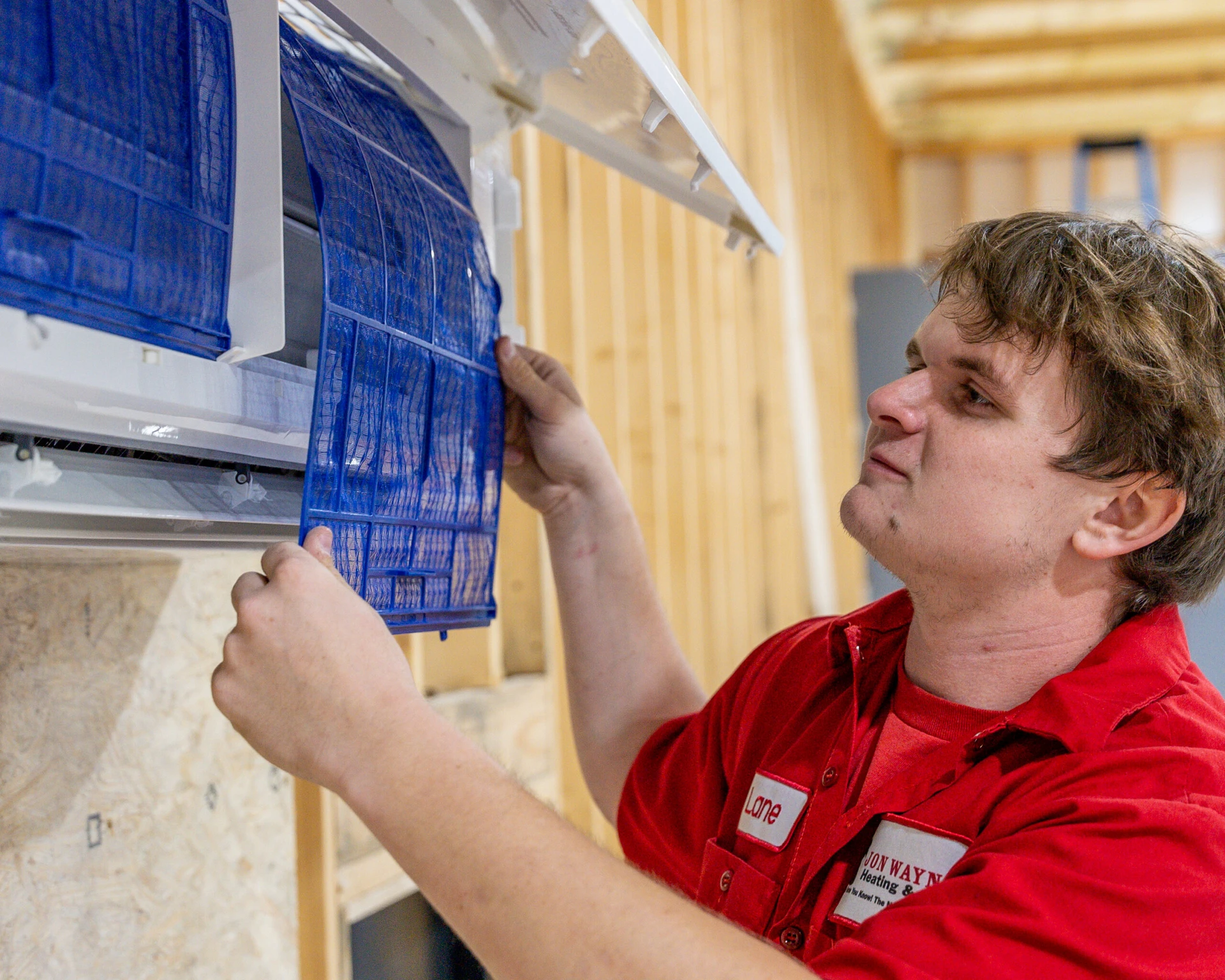
Dirty Air Filters
A clogged air filter is one of the most common causes of AC freeze-ups.
Your system relies on proper airflow to keep the evaporator coil operating at the correct temperature. When the filter becomes packed with dust and debris, airflow decreases significantly.
Without enough warm air moving across the coil, temperatures can drop below freezing and ice begins to form.
Fortunately, this is one of the easiest issues to prevent.
Checking and replacing air filters regularly helps maintain proper airflow and supports efficient operation.
Blocked or Closed Vents
Some homeowners close vents in unused rooms hoping to save energy.
Unfortunately, closing too many vents can restrict airflow throughout the system.
Blocked supply vents, obstructed return vents, or furniture covering air registers can all contribute to airflow problems that increase the risk of freezing.
Every room’s airflow plays a role in helping your HVAC system function properly.
Low Refrigerant Levels
Refrigerant is responsible for absorbing heat from your home’s air.
When refrigerant levels become low due to a leak, pressure within the system changes. This can cause the evaporator coil to become excessively cold.
As moisture condenses on the coil, it quickly freezes.
Unlike replacing an air filter, refrigerant issues require professional diagnosis and repair.
If refrigerant levels are low, simply adding more refrigerant is not enough. The underlying leak must also be identified and corrected.
Dirty Evaporator Coils
Over time, dirt can accumulate on the evaporator coil.
This buildup acts as an insulating layer, reducing heat transfer and restricting airflow across the coil.
The result is lower efficiency and an increased likelihood of freezing.
Routine HVAC maintenance helps keep coils clean and operating properly.
Blower Motor Problems
The blower motor is responsible for moving air throughout your home.
If the motor begins failing or operating inefficiently, airflow may become insufficient to keep the evaporator coil at normal operating temperatures.
A professional inspection can determine whether blower components are contributing to the issue.
What Should You Do If Your Air Conditioner Freezes?
If you suspect your AC has frozen, taking the right steps can help prevent additional damage.
Turn Off Cooling Mode
Continuing to run a frozen air conditioner can worsen the problem.
Switch the thermostat from cooling mode to off.
This prevents additional ice from forming.
Turn On the Fan

Many thermostats allow you to run the fan independently.
Setting the fan to “On” can help circulate air and speed up the thawing process.
Depending on the amount of ice present, complete thawing may take several hours.
Check the Air Filter
Before calling for service, inspect your air filter.
If it appears dirty or clogged, replacing it may restore proper airflow and help prevent future freeze-ups.
Inspect Vents and Registers
Walk through your home and confirm that supply and return vents remain open and unobstructed.
Furniture, rugs, and other household items can sometimes interfere with airflow without homeowners realizing it.
Schedule Professional Service
If ice returns after thawing, or if you suspect refrigerant or mechanical issues, it’s time to contact an HVAC professional.
Recurring freeze-ups almost always indicate an underlying problem that requires expert attention.
How to Prevent Future Freeze-Ups
The best way to deal with frozen air conditioners is to prevent them from happening in the first place.
Here are a few simple steps homeowners can take:
- Replace air filters regularly.
- Keep vents and registers unobstructed.
- Schedule annual HVAC maintenance.
- Address airflow concerns promptly.
- Monitor unusual performance changes.
- Have refrigerant issues inspected by professionals.
- Keep indoor and outdoor equipment clean.
Preventive maintenance is often far less expensive than emergency repairs that result from neglected problems.
Why Professional Maintenance Matters
Many freeze-ups begin as small issues that go unnoticed.
During a routine maintenance visit, HVAC technicians inspect critical components, evaluate airflow, check refrigerant levels, and identify potential concerns before they become major breakdowns.
Regular maintenance not only helps prevent frozen coils but can also improve energy efficiency, extend equipment lifespan, and reduce the likelihood of unexpected summer repairs.
Trust Jon Wayne Heating and Air for AC Repairs in Springfield
A frozen air conditioner is more than an inconvenience. It is a warning sign that your system is struggling to operate properly.
Whether the issue involves airflow restrictions, refrigerant leaks, dirty components, or mechanical failures, addressing the problem early can help prevent more costly repairs down the road.
If your air conditioner is freezing up during the hottest part of the Missouri summer, the experienced team at Jon Wayne Heating and Air is here to help.
Our technicians can diagnose the cause of the problem, recommend the appropriate solution, and restore your home’s comfort as quickly as possible.
Contact Jon Wayne Heating and Air today to schedule professional AC service and keep your system running efficiently all summer long.

